
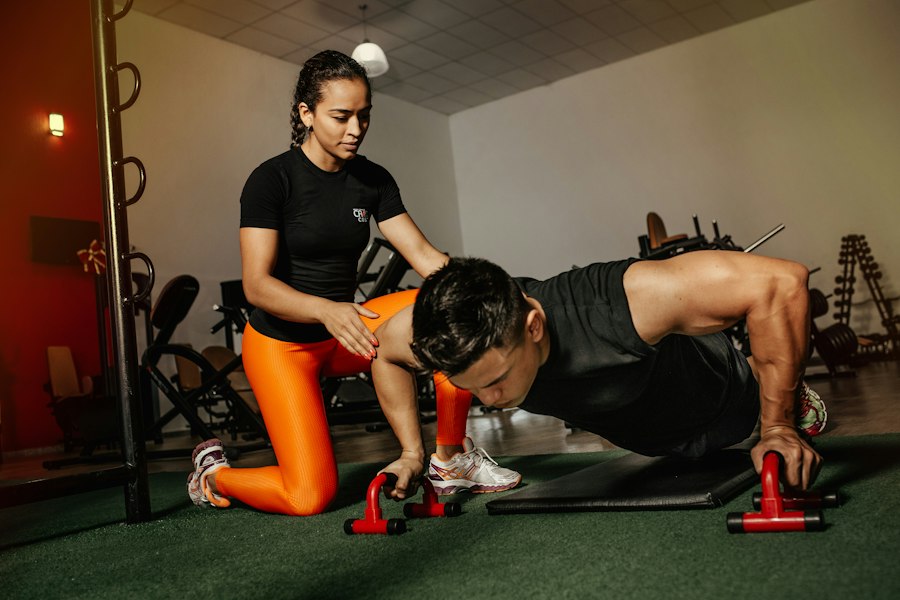
Most guys hammer flat bench and call it chest day. The result? A lower chest that overpowers everything and an upper chest that looks like it belongs to someone who just started lifting.
The upper chest, the clavicular head of the pectoralis major, responds to a specific set of stimuli that flat pressing doesn't fully provide. If you want that full, shelf-like chest, you need to train it with intention.
The anatomy you need to understand
The pec major has two heads: the sternal head (lower/mid chest) and the clavicular head (upper chest). The clavicular head originates from the collarbone and runs down to the humerus. Its primary function is shoulder flexion, meaning it's most active when you press at an angle.
A 2020 study published in the Journal of Strength and Conditioning Research found that incline angles between 30 and 45 degrees produced significantly greater upper pec activation compared to flat pressing (source).
The best exercises for upper chest
1. Incline barbell bench press (30-45 degrees)
This is your bread and butter. Set the bench to 30 degrees, not 45. Most people set it too high, which shifts the load to the front delts.
Check the full exercise guide →
Programming: 4 sets of 6-8 reps. Go heavy. This is a compound movement and the upper chest responds well to progressive overload.
2. Incline dumbbell press
Dumbbells allow a greater range of motion and a deeper stretch at the bottom. The stretch under load is a powerful hypertrophy stimulus, as demonstrated by research from Nosaka et al. on eccentric loading.
Programming: 3 sets of 8-12 reps. Control the eccentric (3 seconds down), pause at the bottom for 1 second.
3. Low-to-high cable flyes
Cables maintain constant tension throughout the range of motion, unlike dumbbells where tension drops at the top. Set the pulleys low and drive your hands up and together at chin height.
Check the full exercise guide →
Programming: 3 sets of 12-15 reps. Squeeze at the top for 2 seconds. This isn't about weight, it's about the contraction.
4. Landmine press
Underrated. The arc of the landmine press naturally targets the upper chest and front delt. It's also easier on the shoulders than a traditional press.
Programming: 3 sets of 10-12 reps per side.
The workout
Here's a focused upper chest session you can slot into your split:
- Incline barbell bench press: 4 x 6-8
- Incline dumbbell press: 3 x 8-12
- Low-to-high cable flye: 3 x 12-15
- Landmine press: 3 x 10-12
Total working sets for upper chest: 13. That's enough volume to drive growth without destroying your recovery.
Programming considerations
According to Dr. Mike Israetel's volume landmarks for the chest, most lifters need 12-20 sets per week for the entire chest. If your upper chest is lagging, dedicate 60-70% of that volume to incline and low-to-high movements.
Frequency matters. Hitting the upper chest twice per week with 6-10 sets per session beats doing all 13 sets in one day. Protein synthesis peaks about 24-48 hours after training and returns to baseline by 72 hours (Damas et al., 2015). Training a muscle once a week wastes half your potential growth window.
Common mistakes
Bench angle too steep. At 60 degrees, the front delt takes over almost entirely. Stay between 30-45 degrees.
Ego loading. The incline press is harder than flat bench. If you're benching 225 flat, expect to use 155-185 on incline. Check your ego.
Neglecting the stretch. Partial reps on incline pressing leave gains on the table. A 2023 study in the European Journal of Sport Science showed that training at long muscle lengths produced nearly double the hypertrophy of short-range reps.
No isolation work. Compound pressing alone doesn't maximize upper chest development. Cable flyes and machine pressing isolate the muscle through its full range without anterior delt dominance.
The bottom line
The upper chest isn't genetically stubborn, it's just undertrained. Prioritize incline angles between 30-45 degrees, include isolation work, train it twice a week, and don't let your ego dictate the weight. In 8-12 weeks, you'll see the difference.